
Active Warrants in DeKalb County
An active warrant is simply one the court or law-enforcement system still counts as outstanding. It might be waiting on service, an appearance, a bond decision, or a court order recalling it. DeKalb County does not put every warrant in one public list. The Superior Court of DeKalb County handles felonies. State Court takes misdemeanors and traffic cases, while Magistrate Court hears civilian criminal warrant applications and first appearances. City citations, ordinances, and failure-to-appear matters stay with the municipal courts. Because the records split this way, the Clerk of Superior Court of DeKalb County and the State & Magistrate Courts Clerk's Office each hold different pieces. Knowing which court owns the case tells you which clerk to ask.
DeKalb Sheriff Uses Phone Routing
The DeKalb Sheriff posts no public active-warrant name search or roster, so phone routing does the work in DeKalb County. The Warrants Unit answers at 404-298-8200, the Fugitive Unit at 404-298-8402, and Court Services at 404-371-2570. For anything after hours, the 24-hour Communications Center is 404-298-8400. If a missed court date may be behind the process, the official State Court failure-to-appear page explains that route.
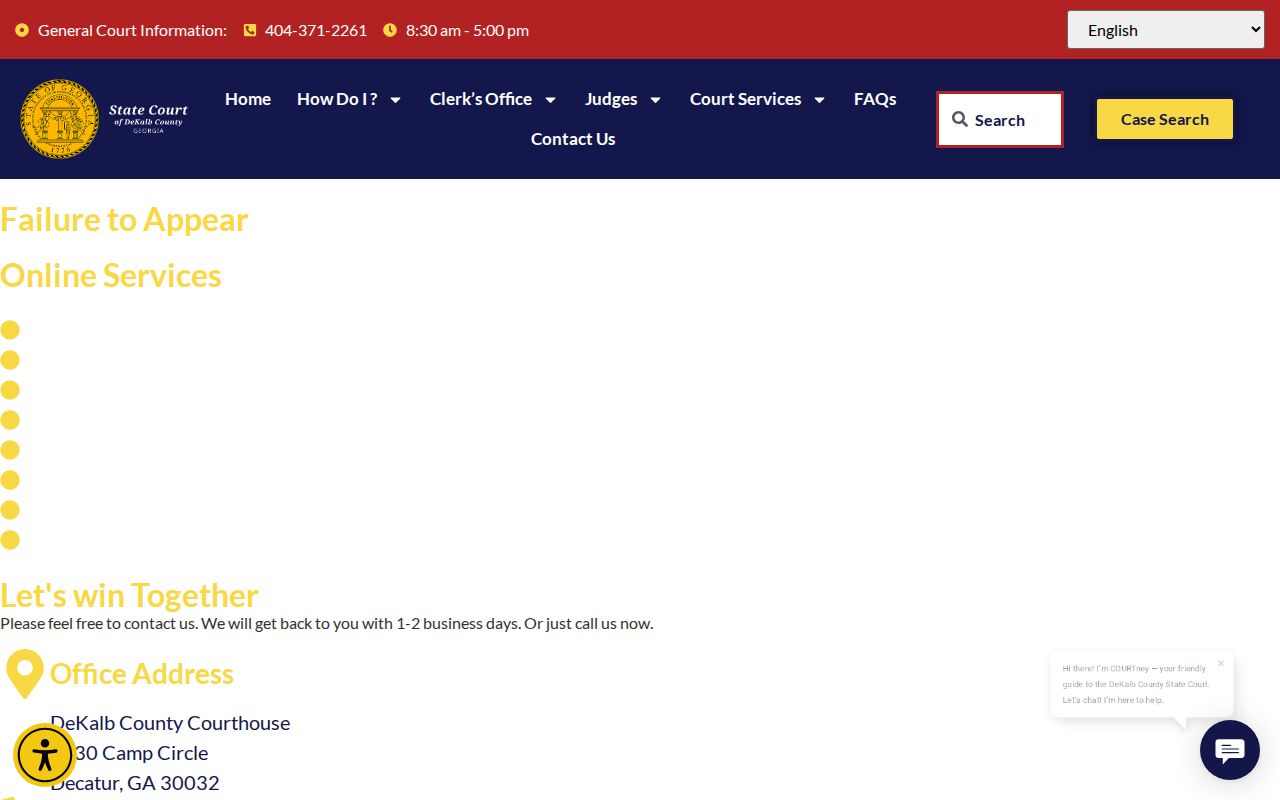
Division B callers are told to phone 404-294-2099. The court may also require a visit to the clerk's office in the Burgess Building at 3630 Camp Circle. That court-specific path beats assuming DeKalb County Sheriff deputies can settle every status question.
How the DeKalb County Active Warrant List Works
DeKalb County has no live active-warrant database the public can browse. The practical equivalent is a layered warrant check. Start with the paperwork or event that may have produced the warrant. Then search or call the likely issuing court, and ask the clerk whether its public docket shows a warrant order, a return, a recall, or a later hearing. When the question is county execution, service, or custody, call the Sheriff's Warrants Unit. Each source answers only its own question. A docket can prove a case exists without revealing current warrant status. A payment page can show a citation is payable without proving a bench warrant was recalled. An inmate search shows custody, not every outstanding warrant. Georgia's GCIC/CJIS systems hold justice records for authorized users only. They are not a public statewide warrant portal.
Note: A missing public result is not proof of clearance because records may be restricted, newly issued, recalled, delayed, or held by another court.
DeKalb Active Warrants Follow the Court
Picking the right office saves time. A felony case belongs with the Superior Court clerk. In DeKalb County State Court, Division A and Division B use separate public case routes, and Division B covers traffic matters and many missed-date questions. Magistrate criminal warrant work happens at 3630 Camp Circle, not at the main courthouse records counter. A city citation stays with that municipal court unless an official sends it elsewhere. The DeKalb Magistrate Court home lays out the criminal, ordinance, and case-finding routes that lead to the right office.
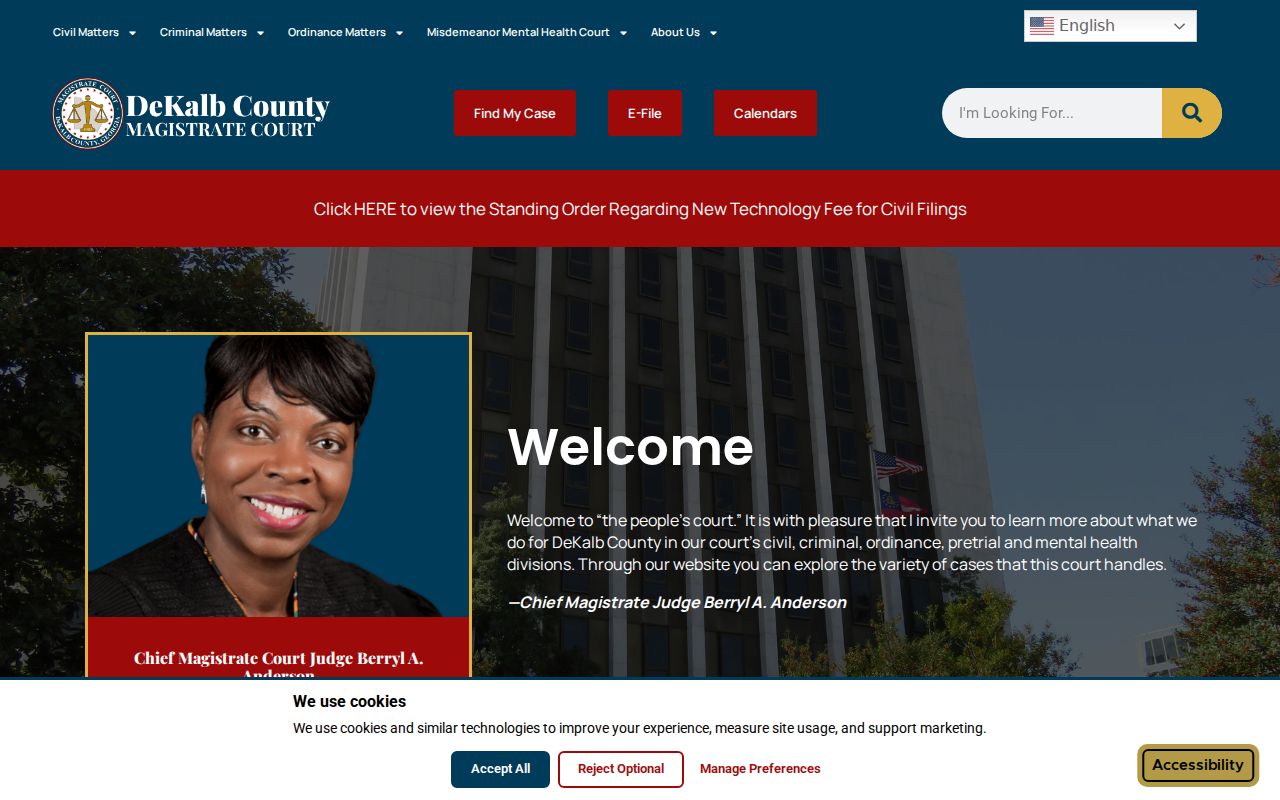
This split of authority is why one DeKalb County active warrant query cannot cover Superior, State, Magistrate, juvenile, and every city court record. Juvenile matters are restricted. No open roster exists for them.
| Underlying matter | First official channel | What to ask |
|---|---|---|
| Felony case | Superior Court clerk | Case file and warrant status record |
| Misdemeanor or traffic | State Court division | FTA, hearing, recall, or disposition |
| Civilian warrant application | Magistrate Court | Application or hearing status |
| City citation | Named municipal court | Bench warrant, reset, and payment limits |
What a DeKalb Active Warrant Shows
DeKalb County publishes no single universal warrant record. The fields below are things to verify with the clerk, not a promise of what every public file holds. Some details can be withheld or redacted. A court portal may also show less than the underlying case file.
| Case or warrant number | The identifier assigned by the court or agency, in the format used by that source. |
|---|---|
| Issuing court | The DeKalb court or municipal court that owns the underlying case and can confirm status. |
| Process type | Arrest warrant, bench warrant, failure-to-appear warrant, or another court process. |
| Issue date | The date the process was issued, when the public record discloses it. |
| Charge or category | The alleged offense, citation, or case category, subject to access restrictions. |
| Bond information | A published amount or release status, if the judge and source make it available. |
| Status | Active, recalled, served, cleared, quashed, or another source-defined term. |
| Last update | The source timestamp needed to judge whether the entry may lag later court action. |
No Georgia Public Statewide Warrant Search
GCIC, the Georgia Crime Information Center, serves authorized criminal-justice agencies and includes wanted or missing information inside that official system. The public cannot run a complete name search there for DeKalb County active warrants. NCIC is likewise official-only, not a public lookup. A commercial search result cannot replace either system or certify that no warrant exists. Before using the right court portal, the DeKalb State Court case-search page presents the Division A and Division B choice a reader must make first.
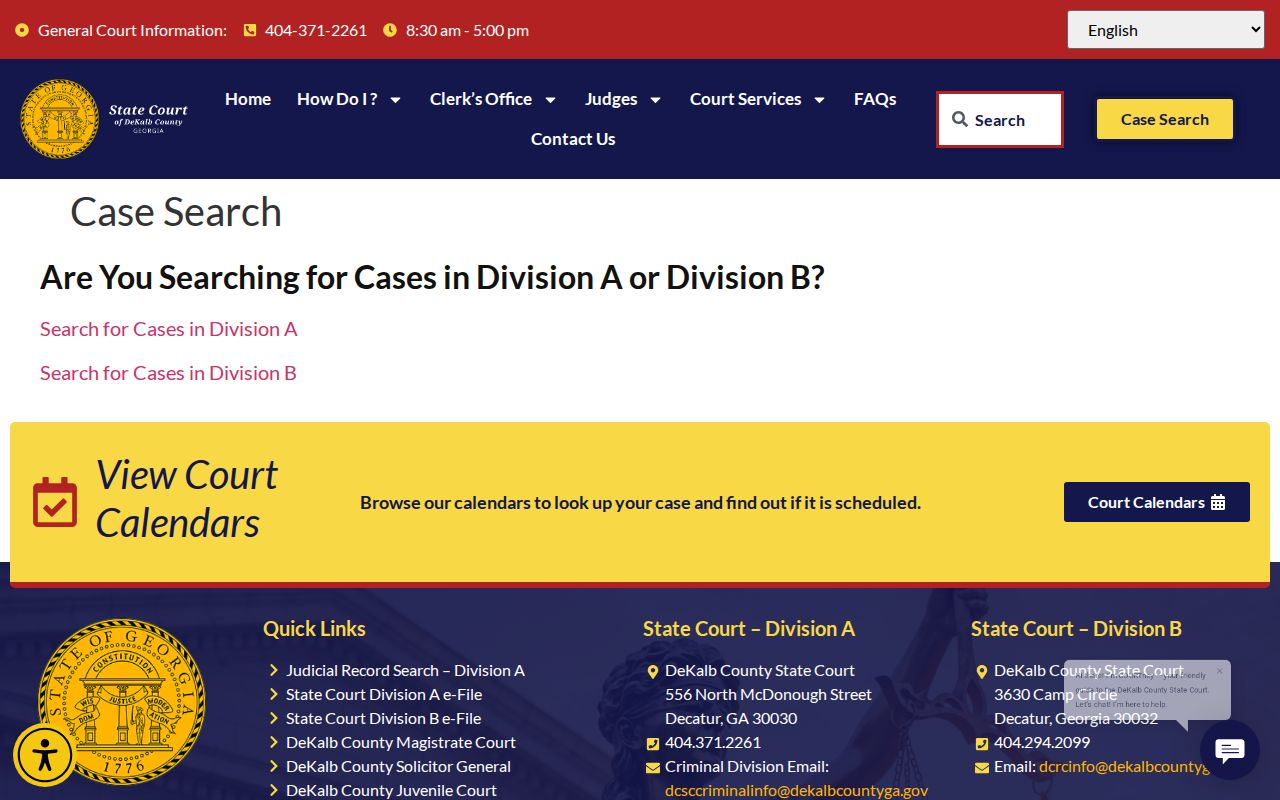
That split points back to the local rule: the court that owns the record controls it. Even two DeKalb County records can demand different portals, clerks, and status checks.
Active: treated as outstanding by the source.
Recalled: withdrawn by the court or authorized office.
Served: execution was recorded, while the case may continue.
FTA: failure to appear, with consequences set by the specific court.
Most-Wanted Lists and Warrant Roundups
A most-wanted page is chosen public-safety communication, never the full set of DeKalb County active warrants. The DeKalb Sheriff publishes no current most-wanted roster. The Sheriff's home, contact, and open-records routes are official, but none is a warrant list. Amnesty events once run by Atlanta, Stonecrest, and Dunwoody were limited by date and eligibility. They created no standing countywide program.
Key Point: The official DeKalb Sheriff site should be checked for any later program announcement; this page never reproduces names, images, or roster entries.
A published list would still be a changing snapshot, so status must be verified with the originating court or Sheriff’s Warrants Unit.
Requesting DeKalb Active Warrant Records
If a portal search or phone call cannot produce a copy, the Georgia Open Records Act, O.C.G.A. §50-18-70 et seq., opens a formal route to whatever DeKalb County agency holds the document. Spell out what you want. Give the record type, a rough date range, the issuing court, and any case or warrant number you have. Ask for the releasable portions. Ask for a cost estimate before production too. Fees stay modest. The Sheriff's published terms allow ten cents per copied page plus lawful search, retrieval, redaction, and direct costs, and the first fifteen minutes of search and retrieval are free. Expect an answer within three business days. That answer may not be the records themselves; it can be an estimate, a production schedule, a request for clarification, or an exemption notice. One further limit matters for anyone chasing DeKalb County active warrants. The official Magistrate civilian warrant application page makes plain that an application is not an issued active warrant.
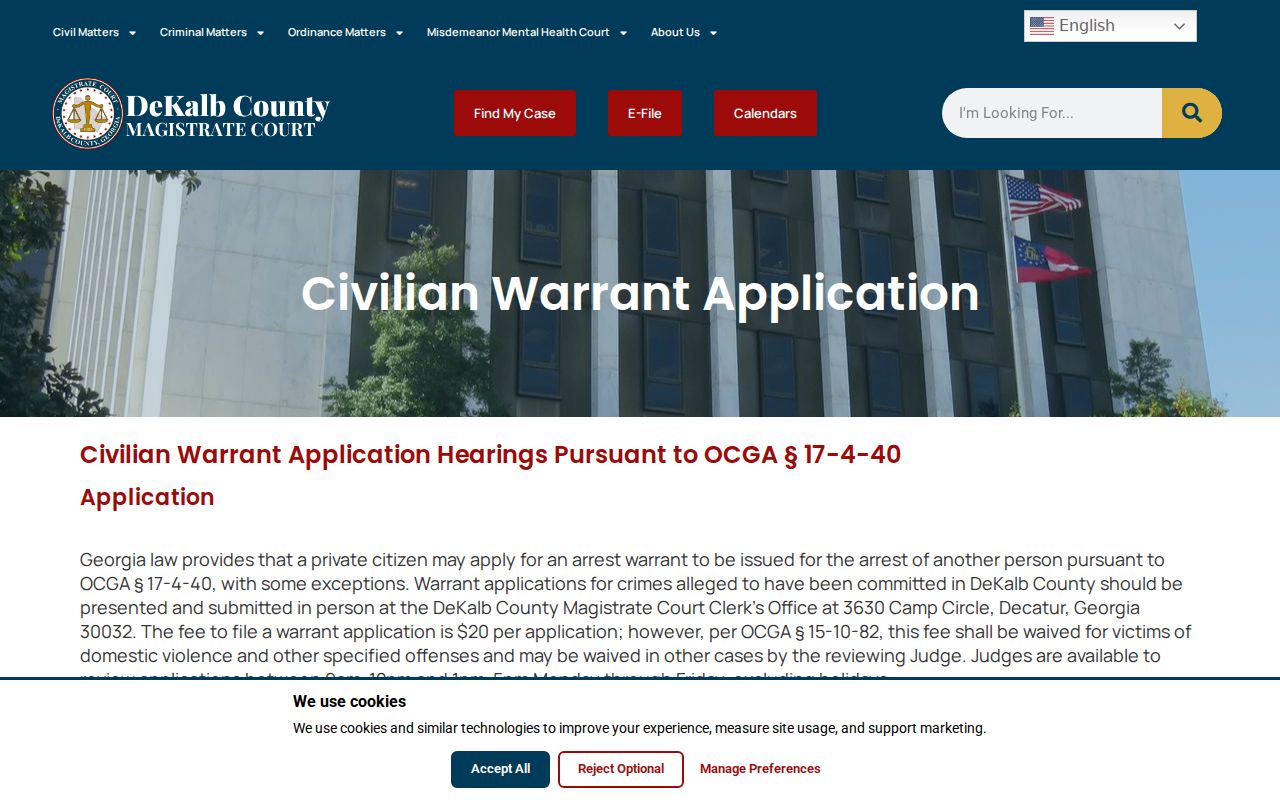
A DeKalb County Magistrate judge reviews each application's facts and probable cause. The application may never become a warrant. Act 482 also changed how notice of a warrant-application hearing is served after July 1, 2026, so confirm current procedures with the court before relying on older steps.
If Your Name Is on the List
Start by calling the issuing court. Confirm the entry is really yours. Ask whether it is still active, what case produced it, and what the court requires next. Paying a ticket online does not by itself recall a warrant. A lawyer can pull the record, raise a motion to recall, quash, or vacate where that fits, and coordinate any appearance a judge requires. The path from there turns on the case and the judge's order. In DeKalb County it may mean a voluntary surrender, posting bond, a reset hearing, payment, or another step the court directs. If custody or surrender is involved, the DeKalb Sheriff bonding office is at 4425 Memorial Drive. Daily hours run from 7 a.m. to 11:59 p.m., and the number is 404-298-8195. Cash, professional surety, and property bond processes work differently. Ask the court or counsel which type is allowed before arranging funds or travel.
Important: Consult an attorney before appearing or surrendering; only the issuing court can confirm the required step and whether a warrant has been recalled.
DeKalb Warrant Calls Need Context
Before calling about a DeKalb County warrant, gather the case or citation number, the court name, an approximate date, and your own identifying details. Say exactly what you need: current status, the responsible clerk, a releasable copy, a court date, or surrender instructions. Staff can route a record question. They cannot give legal advice. Keep sensitive identifiers away from unofficial forms or tip channels.
- Identify whether the matter is felony, misdemeanor, traffic, Magistrate, or municipal.
- Ask the owning court whether a warrant order and later recall or return appear in its record.
- Call the Warrants Unit for county service or execution routing when the court cannot answer that part.
- Use an open-records request for a releasable agency document, not as a demand for a new status report.
For city cases, call the municipal court itself. Atlanta, Brookhaven, Stonecrest, Dunwoody, Tucker, and the other named cities each keep their own records. A city failure-to-appear warrant may never surface in a DeKalb County-facing public result. Facts and procedures here were checked against official sources on September 8, 2026, so recheck anything before you act.